What to expect
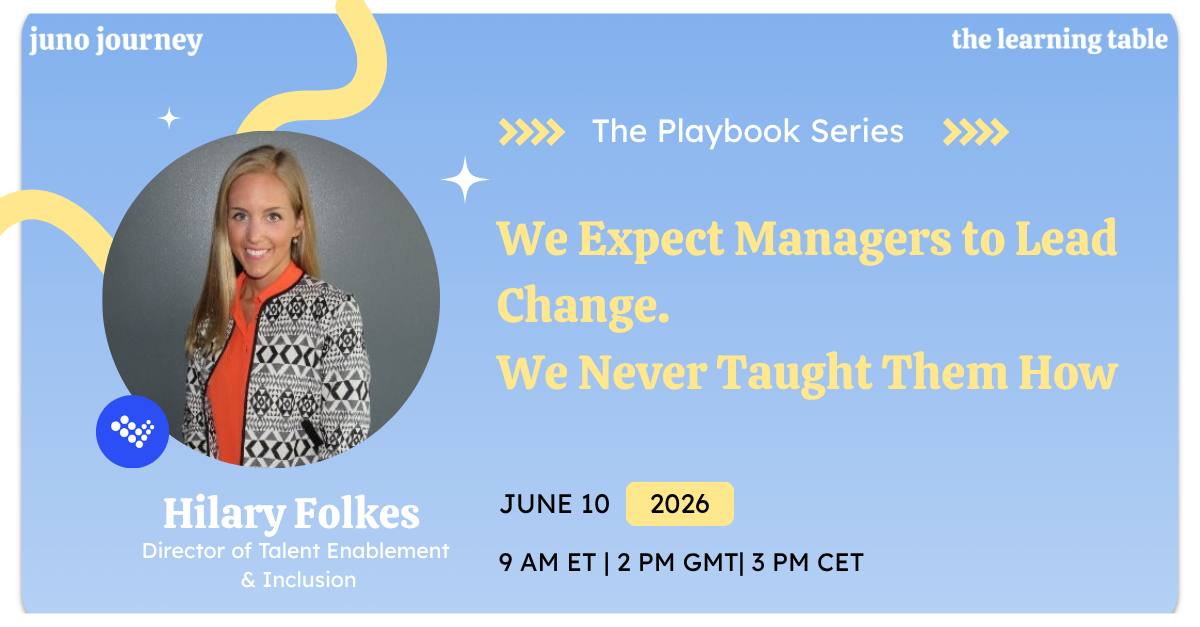
We expect managers to lead change. We rarely train them how to do it.
And yet, manager involvement is the #1 driver of successful change.
So what happens?
Managers are pulled into change from every direction: Too many messages, too many priorities, not enough clarity.
They’re left asking: What do I share? When do I say it? How do I say it?
Some step back. Some guess. Some avoid it altogether. Not because they don’t care. But because they’re not equipped.
This is the manager squeeze. And it shows up everywhere:
Communication scores drop. Employees don’t see how their work connects to company goals. The gap between managers and ICs keeps growing.
This session explores what happens when you flip that. From expecting managers to figure it out… to actually equipping them to lead.
We’ll Cover
1. The Manager Readiness Gap
Why manager involvement is critical to change success, and why most organizations still fail to prepare managers for it.
2. The Manager Squeeze in Practice
What it actually looks like when managers are overwhelmed, under-informed, and unclear on their role, and how this impacts execution on the ground.
3. Why Managers Struggle (and It’s Not What You Think)
Breaking the myth that managers don’t care, and uncovering the real issue: lack of capability, not lack of intent.
4. Building Real Change Capability
How to move from expectation → capability using a structured approach:
- Leading self through change
- Leading others through change
- Leading organizational change
And what happens when this becomes part of onboarding, not an afterthought?
5. What Worked (and What Didn’t)
Lessons from real implementation:
- Where engagement increased
- Where things broke (complexity, overload, lack of embedding)
- What this teaches us about scaling change capability
6. From Training to Enablement
Why training alone isn’t enough, and what it takes to actually support managers in real moments of change.
7. What’s Next: The AI Change Agent
A look into the next step: AI as a co-pilot for managers and change leaders.
How it can:
- Distill key messages
- Translate enterprise change into team-level impact
- Help managers answer: what do I say, and how do I say it?