What to expect
Managers are expected to develop people.
But most were never trained to do it.
And yet, organizations keep doubling down:
More managers.
More expectations.
More responsibility.
But no more capability.
In this session, we go beyond theory and into reality.
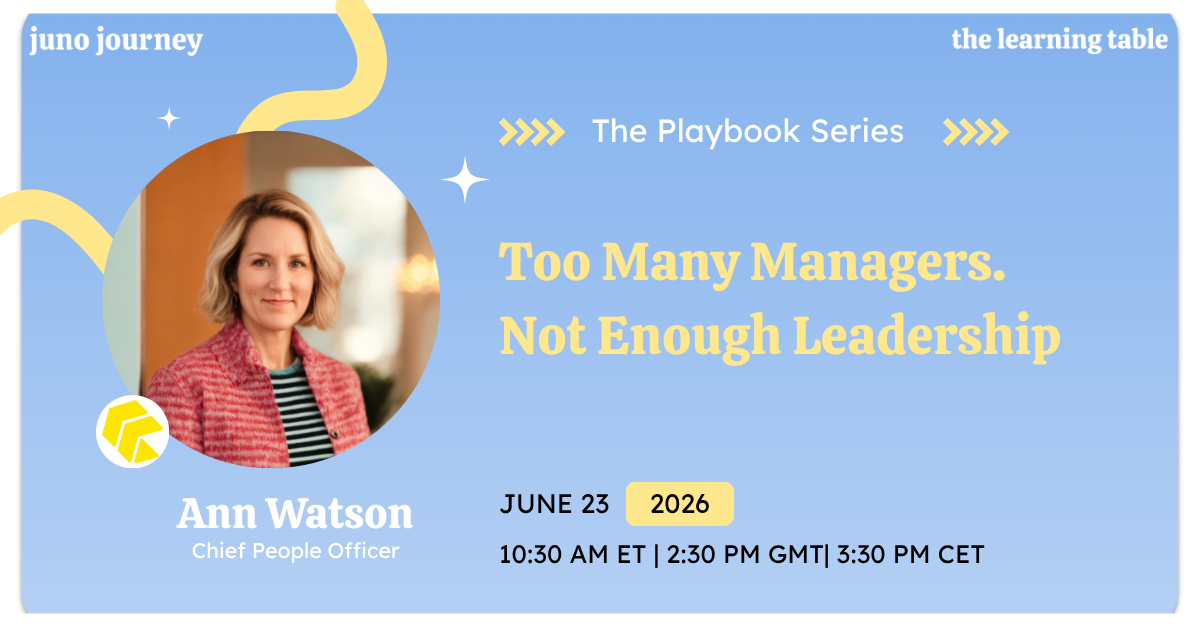
Using real data and experience from Cover Genius, we’ll explore the Manager Readiness Problem, the gap between what managers are expected to do and what they’re actually able to execute.
Because here’s the uncomfortable truth:
You can have high engagement scores…
And still fail in the moments that matter most.
This is a session about:
- What breaks in real execution
- Why traditional approaches don’t hold
- And what might need to fundamentally change
We’ll Cover
1. The Manager Readiness Gap
Why organizations expect managers to develop people, without ever building the capability to do it.
And why does this gap become critical in a world of AI, scale, and execution pressure?
2. The Engagement Paradox
What happens when:
- Employees feel their manager cares
…but
- Managers aren’t showing up in onboarding, feedback, and development
We’ll break down how this shows up in real data, and why it’s more common than you think.
3. When Structure Becomes the Problem
A closer look at:
- A 1:3.2 manager-to-employee ratio
- 25% of the organization is in management roles
What this creates in practice:
- Overloaded managers
- Underutilized managers
- And inconsistent execution across the board
4. What We Tried (and What Broke)
From Manager On-Ramp to other initiatives:
- Where things worked
- Where they didn’t
- And the key realization:
Capability doesn’t scale with title
5. The Shift: From Performance Management → Team Investment
How real usage data exposed the gap between:
- Intent (“we care about development”)
- Execution (what actually happens)
And what starts to change when you shift toward:
- Proactive team investment
- Goal clarity
- AI-supported execution
6. The Provocation
A question we’ll open to the room:
What if the problem isn’t how we train managers… But how many managers do we have?
Fewer managers.
Better trained.
More intentional.
Would that actually work?